
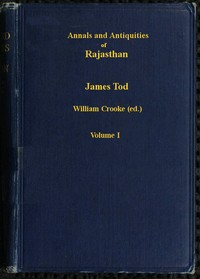
Annals and Antiquities of Rajasthan, v. 1 of 3 by James Tod
Let's be clear from the start: this is not a novel. There's no single plot. Instead, think of it as the most fascinating field report ever written. James Tod was a political agent for the British East India Company in the early 1800s, assigned to the complex network of Rajput kingdoms in what's now Rajasthan.
The Story
The "story" is Tod's attempt to document everything. He structures it partly by geography, touring different kingdoms, and partly by theme. One chapter might detail the bloody history of a fortress like Chittor, where queens committed mass suicide to avoid capture. The next will explain the complex clan system of the Rajputs, or describe a local festival. The central thread is the Rajput code of honor—izzat—which prized loyalty and courage above even life itself. We see this code in action through countless anecdotes: a king choosing death over dishonor, a clan defending its ally to the last man. Woven throughout are the myths Tod collected, like the epic of Padmini, which blend so seamlessly with the historical accounts that the line between fact and legend beautifully blurs.
Why You Should Read It
I love this book because it has two compelling layers. On the surface, it's an unparalleled collection of stories about a warrior culture. The tales of sacrifice, romance, and battlefield cunning are gripping. But the deeper, more interesting layer is James Tod himself. You are seeing Rajasthan through his fascinated, colonial eyes. He admires the Rajputs' bravery but is often baffled by their customs. His writing isn't neutral; it's full of personal opinion, wonder, and sometimes frustration. Reading it, you feel like you're on the journey with him, sifting through conflicting accounts, trying to piece together a puzzle. It's history in its raw, unpolished, and most human form.
Final Verdict
Perfect for history buffs who are tired of sterile textbooks, or for anyone who loves a grand, real-life saga. It's for the reader who enjoys primary sources and doesn't mind a meandering, encyclopedic style. If you want a tight, fast-paced narrative, look elsewhere. But if you want to get utterly lost in another world, guided by a passionate and imperfect chronicler, this volume is a treasure. Just be prepared—you'll likely need to find Volumes 2 and 3 immediately after.
This masterpiece is free from copyright limitations. Enjoy reading and sharing without restrictions.
Jackson Robinson
1 year agoFrom the very first page, the content flows smoothly from one chapter to the next. Highly recommended.
Steven Walker
2 years agoI stumbled upon this title and it provides a comprehensive overview perfect for everyone. Absolutely essential reading.
Deborah Sanchez
4 months agoPerfect.
John Allen
10 months agoClear and concise.







Ethan Thomas
1 year agoRead this on my tablet, looks great.