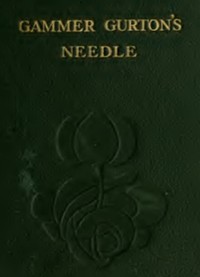
Gammer Gurton's Needle — Story, Setting & Ideas

(5 User reviews)   991
Still, John, 1543?-1608 [Dubious author], Bridges, John, -1618 [Dubious author], Stevenson, William, -1575 [Dubious author], Farmer, John Stephen, 1854-1916 [Editor] Project Gutenberg 2011
Comedy plays; English drama -- Early modern and Elizabethan, 1500-1600 Readers of public-domain and historical texts
Project Gutenberg digital edition en

Edition facts

Words: 23,938
Reading time: 105 min
Text sections: 3
This editorial note examines how the catalog subjects 'Comedy plays' and 'English drama -- Early modern and Elizabethan, 1500-1600' align with the surviving text of Gammer Gurton's Needle, focusing on its rustic dialogue, farcical structure, and the attribution debate among churchmen.
Share
Editorial Edition Score 4.6/5

Calculated from edition completeness, EPUB availability, text structure and catalogue metadata. Not a user rating.

Edition quality

The catalog entry for this play assigns it to 'Adventure & Picaresque Fiction' and lists subjects such as 'Comedy plays' and 'English drama -- Early modern and Elizabethan, 1500-1600.' Yet the excerpts reveal a work far removed from picaresque adventure: a domestic farce centered on a lost needle, with characters like Gammer Gurton, Hodge, and Diccon speaking in thick dialect. The play’s humor derives from physical comedy and verbal sparring rather than travel or trickery. The editorial introduction by John S. Farmer further complicates matters by detailing the disputed authorship among three churchmen—John Still, John Bridges, and William Stevenson—none of whom can be securely identified as 'Mr. S.' on the title page.

Dialect and Rustic Voice

The excerpts showcase a deliberate use of rustic dialect that distinguishes the play from more polished Elizabethan comedies. Gammer Gurton’s speech is marked by contractions like 'cha (I have), 'chwot (I know), and cham (I am), while Hodge’s testimony in Act IV, Scene 2 repeats the phrase see now as a rhythmic refrain. This linguistic texture aligns with the catalog subject of early modern drama but also suggests a specific interest in representing rural speech. The dialect is not merely decorative; it drives the comedy, as when Gammer describes her loss: 'cha lost my good nee'le! The play’s voice is thus a key feature that the catalog subject 'Comedy plays' only partially captures.

Farcical Structure and Repetition

The excerpts reveal a structure built on repetition and escalating misunderstanding. Hodge’s long speech in Act IV, Scene 2 recites the same incident four times, each ending with Is not this a wondrous thing, see now? This pattern mirrors the farcical logic of the play, where a trivial loss (a needle) leads to accusations, physical fights, and the involvement of the local cleric Doctor Rat. The catalog subject 'Comedy plays' fits this farcical mode, but the play’s reliance on iterative storytelling and physical humor—such as Gammer being 'caught by the head' and having her coat torn—suggests a performance tradition closer to medieval interludes than to later Elizabethan comedies. The structure is tight, each scene building toward the climax of the act, as noted in the editorial introduction quoting C. Mills Gayley.

Attribution and the 'Mr. S.' Problem

The editorial introduction by John S. Farmer foregrounds the unresolved authorship question. Isaac Reed attributed the play to John Still, later Bishop of Bath and Wells, based on a college account entry and the initials 'Mr. S.' on the title page. However, Farmer notes that this reasoning is 'somewhat inconclusive,' and another churchman, John Bridges, has also been proposed. The play’s catalog subjects do not address this textual history, yet the attribution debate is central to understanding the work’s provenance. The excerpts themselves offer no internal evidence of authorship, but the play’s unclerical content—featuring a brawling gammer, a manipulative Diccon, and a gullible Doctor Rat—makes the clerical attributions ironic. Readers should approach the play aware that its author remains uncertain, a fact that the catalog record obscures.

Readers of this edition should attend to the play’s dialect and repetitive structure as evidence of its performance origins. The catalog subjects provide a starting point, but the text itself rewards attention to its rustic language and farcical pacing. The authorship question, while unresolved, adds a layer of historical curiosity that enriches rather than detracts from the comedy.

Mila Nguyen
2 weeks ago

Scarlett Thompson
1 week ago

Matthew Gonzalez
4 weeks ago

Ava Carter
4 weeks ago

Dylan Perez
3 weeks ago

4
4 out of 5 (5 User reviews )

Add a Review

Your Rating *
  • ...
    Nicole Christian Cooper - 2 weeks ago
    Gammer Gurton's Needle is a rollicking Tudor farce that delivers nonstop laughter and clever slapstick. The play revolves around a lost needle and the ensuing chaos, with vividly drawn characters and raucous dialogue that still entertains today. It's a masterpiece of low comedy, and the fast-paced plot keeps you engaged until the hilarious reveal. Perfect for fans of historical humor and classic theater.

  • ...
    Jennifer Brown - 2 weeks ago
    This Tudor comedy offers a fascinating glimpse into Elizabethan entertainment. The plot is simple yet amusing, centering on a lost needle and the mistaken accusations that follow. While it's historically significant as one of the earliest English farces, modern readers might find the humor crude and the dialect challenging. Still, for those interested in theater history, it's a worthwhile quick read.

  • ...
    Joseph Garcia - 2 weeks ago
    Gammer Gurton's Needle is a tedious and crude piece that fails to amuse. The humor relies on slapstick and broad caricatures, which feel repetitive and dull. The dialect and archaic language make it hard to follow, and the plot is absurdly thin. I appreciate its historical value, but as a reading experience, it's a chore. Unless you're a scholar, I'd skip this one.


Reader reflection

Your personal reading reflection

Build a private reading journal entry for this title.

Your progress 0 / 10
1

What is your current status with this title?

2

Did this book hold your interest?

3

Would you recommend this book to another reader?

4

How demanding did the text feel?

Related eBooks