
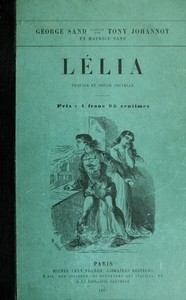
Lélia by George Sand
Published in 1833, Lélia is George Sand's most personal and philosophical novel. It's less about a sequence of events and more about a state of being. We follow the titular Lélia, a woman of profound intellect and beauty who is trapped in a deep spiritual and emotional crisis. She is adored by the young, idealistic poet Sténio, who sees her as the answer to all his romantic dreams. But Lélia cannot return his passion. Her experiences have left her emotionally frozen, unable to believe in the love or the God that society champions.
The Story
The plot follows the tense relationship between Lélia and Sténio. He pursues her with youthful fervor, while she pushes him away with cold, logical arguments about the emptiness of earthly love and religious faith. Their dynamic is witnessed and commented on by other characters, like the world-weary Tremnor and the devout nun, Pulchérie, who is also Lélia's sister. The story moves through conversations in salons, lonely walks in nature, and intense internal monologues. It’s a battle of ideals: Sténio's hopeful romanticism against Lélia's disillusioned realism. The tension isn't about will they or won't they, but about whether any human connection can survive such a fundamental clash of how to see the world.
Why You Should Read It
This book is a punch to the gut in the best way. Sand doesn't give us a likable, easy heroine. Lélia is difficult, often cruel, and exhausting. But her despair is so articulate and her intelligence so sharp that you can't look away. Reading it feels like overhearing the most intimate, painful confession. It’s a raw look at depression, existential doubt, and the specific agony of a woman whose mind has no acceptable outlet in her society. Forget dainty romance; this is about the soul's deepest hunger and its refusal to be satisfied with simple answers.
Final Verdict
Lélia is not a light read. It's for the reader who doesn't mind a novel where the biggest action happens inside a character's head. Perfect for anyone interested in the roots of feminist thought, classic literature that tackles mental health, or stories about brilliant misfits. If you loved the emotional intensity of Wuthering Heights or the intellectual rebellion in Frankenstein, but wished the central voice was a disillusioned woman instead of a passionate man or a monster, this is your next great read. Come for the 19th-century drama, stay for the shockingly modern voice.
Legal analysis indicates this work is in the public domain. You do not need permission to reproduce this work.
Dorothy Hill
1 year agoAs someone who reads a lot, it challenges the reader's perspective in an intellectual way. Exceeded all my expectations.
Paul Taylor
1 year agoBeautifully written.









Kimberly Taylor
1 year agoI was skeptical at first, but the depth of research presented here is truly commendable. Exceeded all my expectations.