
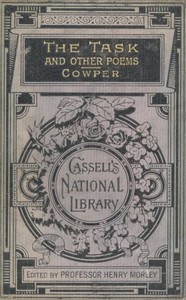
The Task, and Other Poems by William Cowper
Let's be honest—poetry from the 1700s can sound intimidating. But William Cowper’s 'The Task and Other Poems' feels different. There's no grand epic or ancient mythology here. Instead, Cowper takes something as ordinary as a sofa (the 'task' was to write about it) and uses it as a springboard. The poem unfolds like a long, thoughtful walk. He describes the English countryside in vivid detail: the frost on the grass, the sound of a stream, the way firelight dances in a cozy room. Between these beautiful scenes, he shares his opinions on everything from politics and city life to the cruelty of hunting. The whole thing is held together by his personal voice—a man searching for peace in nature while battling what he called 'melancholy' (what we might recognize as depression).
The Story
There isn't a traditional plot. 'The Task' is a blank-verse poem divided into six books. It begins with the history of the sofa, a seemingly silly start that quickly becomes a lens for looking at human comfort, laziness, and progress. From there, Cowper just… wanders. He writes about the joy of a winter walk, the simple pleasure of gardening, and the quiet of an evening at home. He contrasts this with sharp critiques of busy London life, slavery, and the emptiness of fashionable society. Woven throughout is his own spiritual journey—his love for God, mixed with periods of terrible doubt and despair. Other poems in the collection, like the heartbreaking 'On the Receipt of My Mother's Picture,' deal more directly with personal grief and memory.
Why You Should Read It
You should read this because Cowper makes the 18th century feel close and human. His love for nature is contagious—you'll want to go for a walk after reading. But it's his honesty about mental struggle that truly resonates. He doesn't hide his pain; he writes about sitting by the fire while a storm of sadness rages inside. That combination of beautiful, precise descriptions of the outside world and fearless exploration of the inner world is powerful. He finds holiness in the mundane and questions everything, all in a language that's more conversational than you'd expect for his time.
Final Verdict
This book is perfect for anyone who enjoys nature writing, thoughtful essays, or poetry that feels personal rather than pompous. If you like the reflective mood of writers like Wendell Berry or the intimate voice of a good memoir, you'll find a friend in Cowper. It's also a great pick for readers interested in the history of mental health. Fair warning: it's not a page-turning thriller. It's a slow, rich, contemplative read best enjoyed a few pages at a time, maybe with a cup of tea. Give it a chance, and you might be surprised by how much this 250-year-old poet has to say about your own life.
The copyright for this book has expired, making it public property. Preserving history for future generations.






Emma Martin
2 years agoAs someone who reads a lot, the content flows smoothly from one chapter to the next. I would gladly recommend this title.