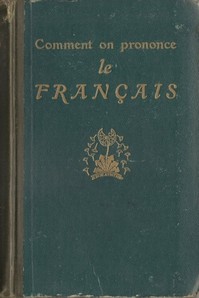
Comment on Prononce le Français by Philippe Martinon
The Story
This book isn't a novel with characters or a plot—it's more like a detective story about a sound. Philippe Martinon, a turn-of-the-century scholar, sets out to map how French was really spoken in his time. He's not satisfied with the stuffy rules from textbooks; he wants to know how normal people—waiters, grandmothers, students—rapped out their sentences. He travels through France, chatting and listening, picking up on a crumbling accent here or a smooth pronunciation there. He calls them homo sensuel and homme de goût speakers, each with their own local flavour.
The conflict: Is French heading toward a grinding crash of letters, or is it quietly shaping something new? He shows us in real terms—using fun spelling tricks and conversations—that French is alive, messy, and always arguing with itself. Forget neat lists of verbs; there's a tension between conservatism and innovation, and Martinon loves teasing it out.
Why You Should Read It
I couldn't put this book down, honestly. It's not just about letters; it’s about listening. Martinon paints Parisian chatterers and Lyonnaise shopwomen with humour, calling them on their sloppy 'r' sounds or their over-the-top nasal vowels. My favourite part was his breakdown of what he calls the 'e muet'—that quiet little 'e' that's all but ghosted now. He argues it’s not just polite or rude; it’s about who you are!
The best part? He’ll never tell you the 'right' way; he gives you the real deal, with wit. For example, he looks at pronunciation violence—the slangy crush of words in a fast conversation—and you start to feel like you’re right there, hearing the crazy mix. It’s a manual, yes, but personal. He gets your gripe about why 'perspective' sounds so stiff versus 'aveu.' And if you’ve ever felt foolish in a French conversation, Martinon says it’s all history, baby—the snobbish Parisians were arguing the same, one hundred years ago. Very humanising!
Final Verdict
Perfect for language lovers who want more than apps—slice of living history, with real Eiffel Tower-era flair. If you dig stuff like Memoirs of a Duc or just want clarity on why people laugh at your accent—this feels like a pep talk in old books. Best for curious minds or anyone who’s spent frustrating hours trying to say 'indécidable' without mumbling. Should I recommend it to everyone? Yes. Especially if you're into learning from eccentrics—he has opinions on fake French and gatecrashers of the standard tongue! Quick note: carry a grin while reading, it catches you. Absolutely top-tier if you love poking into linguistic family drama. Verdict: read it, record yourself saying something before you start, and be amazed later.
You are viewing a work that belongs to the global public domain. Knowledge should be free and accessible.