
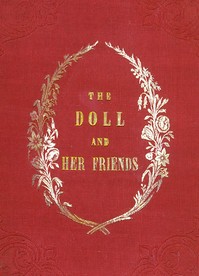
The Doll and Her Friends by Julia Charlotte Maitland
I‘ll admit it—when a friend shoved this tattered little Victorian novella into my hands and said pretty much just ''You have to read it,'' I was mostly curious about the title. But wow. 'The Doll and Her Friends' by Julia Charlotte Maitland is a surprising joy of a book that deserves way more love than it gets.
The Story
The story is deceptively simple. A doll named Rosalys becomes a kind of small-time victim of human vanity and thoughtlessness. First, she belongs to a spoiled girl named Georgie, who adores her to bits but thinks of her as an object—and eventually gets bored. Then a greedy nursemaid sells her away to a new household. Rosalys winds up with a kindly owner but one who‘s into ‘pets’ and chaos; now the poor doll gets scratched by a puppy and has her dresses ripped. Then she goes to Eva, a shy child who worships her, but neglect sends Rosalys to the dark closet of an attic. Eventually, after the doll gets broken, fixed, broken again, she‘s nearly discarded—until something wonderful happens via the most unlikely person: a little girl‘s poor mother. What I thought was pure charm at first became, quite unexpectedly, a rumination on worth and love and what ‘friendship’ really costs.
Why You Should Read It
For such a short book, it doesn't waste a single sentence. Maitland makes the doll not be little-girly; Rosalys learns lessons the hard way, afraid and sometimes vain, but eager to grow. I found myself honestly anxious every time she was near mistake-prone children who didn't see her soul. Her line ''I began to think I had misunderstood Pity and Appreciation utterly, considering my life’s worth either too much or too little'' stopped me. How many times have all of us, regardless of age, pivoted between craving admiration and feeling irrelevant? The book’s gentle frame—that she’s a doll lost among forgetful humans—doesn't feel like a metaphor shoved at you. It just unfolds like walking through a very good story. And the bit about how the doll learns to ’be content even with damage and patches’ hits surprisingly hard for grown-ups in the 21st century. Before I knew it, I was reading it again for my daughter aloud—tearing up near the ending.
Final Verdict
Honest, fragile in a quiet way, never clumsy with its moral, 'The Doll and Her Friends' is perfect for Vintage readers who delighted in 'The Ugly Duckling' and also fell for 'The Little Princess' by Frances Hodgson Burnett by the light of a flashlight, people who liked Victorian writers who use simplicity as a club for empathy-whacking. Also, to anyone who wants a break from snappy plot: this works better with loose attention, the mood for sentiment smartly written. Basically, open the book, squish a cushion, likely allow a single tear. Characters own me now—haven’t gone back the real world yet.
There are no legal restrictions on this material. Knowledge should be free and accessible.






Emily Williams
1 week agoThe citations provided are a goldmine for further academic study.