
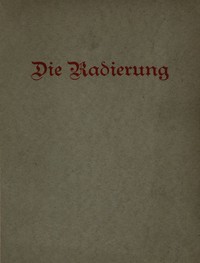
Die Radierung: Ein Leitfaden und Ratgeber by Alois Leopold Seibold
Let's be clear from the start: Die Radierung: Ein Leitfaden und Ratgeber is a how-to book. Published in 1912, it was written by Alois Leopold Seibold, an artist and teacher, to be a complete guide for anyone wanting to learn the craft of etching.
The Story
There's no plot in the traditional sense. Instead, the 'story' is the journey of creating an etching from scratch. Seibold walks you through it, chapter by chapter, like a meticulous mentor. He starts with the basics: what tools you need, how to choose and prepare a copper plate, and how to draw your design onto it with a protective ground. Then comes the exciting part—biting the plate with acid. He explains how to control the acid's strength and timing to get different line depths. After that, it's all about cleaning the plate, inking it up, and finally, using a heavy press to transfer the image onto paper. He doesn't just list steps; he gives you the little tricks and warnings that only come from years of experience, like how to fix a mistake or why a certain type of paper works best.
Why You Should Read It
You should read this even if you're not an artist. I'm not! What grabbed me was the voice. This isn't a sterile, modern textbook. Seibold's passion for the craft bleeds through every page. You can feel his respect for the materials and his desire to pass on knowledge that was, even then, becoming specialized. Reading it is a quiet, focused experience. It slows you down. In our world of instant digital everything, there's something deeply satisfying about following a process that demands this much patience and precision. It turns a technical subject into something almost meditative.
Final Verdict
This book is a niche treasure, but its appeal is broader than you might think. It's perfect for history buffs and art lovers who want to understand the 'how' behind the beautiful prints they see in museums. It's essential for any practicing printmaker interested in historical techniques. And I'd also recommend it to anyone who enjoys well-written, practical guides from a bygone era. It's a masterclass in clarity and dedication. Just be ready for some old German technical terms—having a dictionary (or a translation app) nearby helps, but Seibold's clear explanations often make the process understandable even without it.
This publication is available for unrestricted use. Feel free to use it for personal or commercial purposes.
Logan Walker
2 years agoThis is one of those stories where the depth of research presented here is truly commendable. A true masterpiece.
Kevin Williams
1 year agoTo be perfectly clear, the emotional weight of the story is balanced perfectly. I couldn't put it down.
Anthony Rodriguez
6 months agoThanks for the recommendation.


Elizabeth Hill
1 year agoCompatible with my e-reader, thanks.