
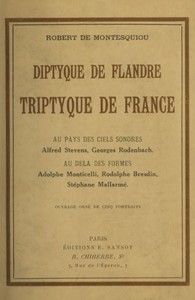
Diptyque de Flandre, triptyque de France by comte de Robert Montesquiou-Fézensac
Let's be clear from the start: this isn't a novel with a plot in the usual sense. It's a personal investigation, a kind of detective story where the crime is a missing link in art history. The 'detective' is the author himself, Count Robert de Montesquiou-Fézensac.
The Story
The book follows Montesquiou's fixation on two specific artworks. He describes the Flemish diptych in vivid detail—its colors, its figures, its mood. Then he does the same for the French triptych. On the surface, they're separate pieces. But he starts pointing out echoes: a similar glance in a subject's eye, a parallel use of shadow, a shared symbolic object tucked in a corner. He builds his case piece by piece, drawing on his vast knowledge of European aristocracy, local legends, and artistic techniques. The 'story' is the journey of his argument, watching him try to convince you (and perhaps himself) that these two paintings are having a silent conversation across the centuries.
Why You Should Read It
I loved this book for its sheer audacity. Montesquiou doesn't just present dry facts; he writes with the passion of a collector who has found his holy grail. You can feel his excitement in every paragraph. It makes you look at art differently. After reading it, I found myself staring at paintings longer, wondering about their hidden stories and what other pieces they might secretly be linked to. It’s also a fascinating peek into the mind of a late 19th-century aesthete—a man for whom beauty and connection were the most important things in the world. The book is as much a portrait of the author as it is of the paintings.
Final Verdict
This is a niche book, but a brilliant one for the right reader. It's perfect for art lovers, history enthusiasts, or anyone who enjoys a good intellectual puzzle. If you like the idea of an eccentric guide showing you the secret threads between things, you'll be captivated. Fair warning: it requires a bit of patience and a love for detailed description. But if you give yourself over to Montesquiou's peculiar vision, it's a truly unique and rewarding trip.
This text is dedicated to the public domain. Feel free to use it for personal or commercial purposes.
Kimberly Lopez
1 year agoI was skeptical at first, but the character development leaves a lasting impact. Thanks for sharing this review.
Jennifer Torres
1 year agoI didn't expect much, but the plot twists are genuinely surprising. Definitely a 5-star read.


Kevin Flores
1 year agoI had low expectations initially, however the depth of research presented here is truly commendable. Definitely a 5-star read.