
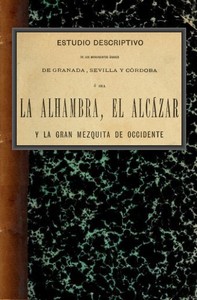
Estudio descriptivo de los monumentos árabes de Granada, Sevilla y Córdoba
Imagine a guidebook written not for tourists, but for the future. That's the heart of Rafael Contreras's Estudio descriptivo de los monumentos árabes de Granada, Sevilla y Córdoba. Published in the late 19th century, this isn't a story with characters in the traditional sense. The 'characters' are the buildings themselves: the Alhambra, the Giralda, the Mezquita. The 'plot' is Contreras's detailed, loving effort to document every arch, inscription, and courtyard before time and indifference erased them.
The Story
The book is a systematic walkthrough. Contreras takes you building by building, room by room. He describes what he sees with the eye of an artist and a restorer, noting colors, patterns, construction techniques, and the state of preservation. He copies down Arabic inscriptions and translates them, giving voice to the walls. But woven into these descriptions is a constant, quiet drama: notes about a collapsed ceiling here, a missing tile there, a wall whitewashed over. He's not just cataloging beauty; he's filing a report on its disappearance. The driving force is his deep belief that these monuments are not foreign objects, but the very foundation of Andalusian identity and art.
Why You Should Read It
You should read this to feel history in the present tense. Most history books tell you what happened. This one shows you what was happening—the slow loss of a legacy—as the author frantically tried to stop it. Contreras's passion is contagious. His writing makes you care about a single, weathered stucco panel. It transforms a visit from simply seeing 'old pretty things' to understanding a fragile, living record. You see the monuments not as static postcards, but as survivors. It adds a layer of preciousness and urgency that modern, glossy guides can't match.
Final Verdict
Perfect for the curious traveler who wants to go deeper than a guidebook, or for anyone fascinated by architectural history and preservation. It's especially rewarding if you've been to these cities and can picture the places he describes. Be prepared for a detailed, descriptive style—it's a 19th-century survey, after all. But if you let it, this book will turn you from a passive observer into an active witness, seeing the ghosts of splendor and the fingerprints of a man who fought to keep them alive.
This work has been identified as being free of known copyright restrictions. You do not need permission to reproduce this work.
Betty White
1 year agoI have to admit, the depth of research presented here is truly commendable. Highly recommended.
Emma Walker
1 year agoHaving read this twice, the character development leaves a lasting impact. I would gladly recommend this title.






Jackson Anderson
3 months agoBeautifully written.