
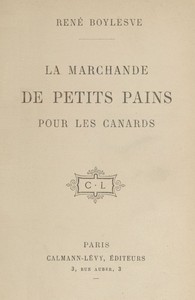
La marchande de petits pains pour les canards by René Boylesve
René Boylesve’s La marchande de petits pains pour les canards (The Seller of Little Breads for the Ducks) is a charming, deceptively simple novel that captures a whole world in a single, peculiar incident. First published in 1899, it feels both timeless and perfectly placed in its era.
The Story
The plot is straightforward. In a provincial French town governed by strict social codes and quiet boredom, a stranger appears. She is a young woman who chooses to earn her living by selling bread to townsfolk so they can feed the ducks in the local park. She doesn't try to fit in. She doesn't explain herself. She just is, a calm and persistent presence by the water's edge.
The story isn't really about her, though. It's about the reaction she provokes. Boylesve turns his eye on the town itself—the mayor, the busybodies, the young men, the proper ladies. Her simple, innocent trade becomes a scandal. Why would a woman do this? What are her real motives? Is it proper? The town's collective anxiety and fascination build, revealing their own prejudices, insecurities, and secret desires for something more than their prescribed lives.
Why You Should Read It
I adore this book because it’s so smart about human nature. Boylesve is a master of observation. He doesn't judge his characters harshly; he just shows us how silly and profound people can be when faced with the unfamiliar. The ‘mystery’ of the bread seller forces everyone to confront the invisible walls of their own society.
It’s also incredibly funny in a gentle, knowing way. The escalating gossip, the officious meetings, the sheer amount of energy spent worrying about bread and ducks—it’s a perfect satire of small-town life that still feels relevant today. Underneath the humor, though, there’s a real empathy for the woman’s quiet independence and a sadness for the town’s inability to understand it.
Final Verdict
This book is perfect for readers who enjoy character studies and social comedies. If you like the works of Jane Austen for their focus on manners, or the quiet tension in a story by Alice Munro, you’ll find a friend here. It’s not a plot-heavy thriller; it’s a slow, satisfying immersion into a moment where everyday life reveals its strange and beautiful depths. A hidden gem for anyone who believes that great stories are often about the smallest ripples.
There are no legal restrictions on this material. It is now common property for all to enjoy.







David Ramirez
1 year agoClear and concise.