
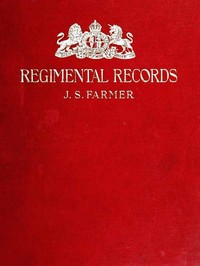
The Regimental Records of the British Army by Farmer and Farmer
Let's be clear from the start: this is not a bedtime story. John Stephen Farmer's The Regimental Records of the British Army is a reference work, a colossal effort to compile and publish the primary documents of the British Army from the early 18th to the mid-19th century. Imagine a librarian took every file box—the muster rolls, casualty returns, standing orders, and promotion lists—from a hundred different regiments and decided to print them all. That's this book. There's no narrator guiding you, no authorial opinion. It's just the records, presented as they were written.
The Story
There isn't a plot in the traditional sense. The 'story' is the collective experience of the British Army, told through its own paperwork. One page might list the names of men who enlisted in the 24th Regiment in 1760. The next could detail the punishments handed out for drunkenness. Another might coldly record the names of those killed at the Battle of Waterloo. You move from the mundane details of daily rations and shoe allowances to the sudden, stark reality of a battle's aftermath. You see regiments being formed, shipped across oceans, fighting, and sometimes being disbanded. The narrative is fractured and vast, built from a million administrative fragments.
Why You Should Read It
You don't read this book cover-to-cover. You explore it. The power isn't in sweeping prose, but in the chilling immediacy of the source material. Seeing a soldier's name appear on a muster roll in 1805 and then on a casualty list from 1812 hits harder than any novelist's description ever could. It connects you directly to the past. You start to see patterns—the constant struggle with disease, the transfers between units, the sheer scale of logistics. It strips away the romantic Hollywood gloss and shows the army as a vast, often brutal, organization made of individuals. For me, the most compelling parts were the minor details: the inventories of what was in a regimental hospital, or the specific prices for replacing lost kit. That's where real history lives.
Final Verdict
This is a specialist's treasure, but its appeal can stretch further. It's perfect for military historians, genealogists, or historical fiction writers who need authentic detail. If you're a casual reader with a deep interest in the Napoleonic era or the British Empire, dipping into this can be a profoundly illuminating (if sobering) experience. However, if you're looking for a flowing historical account, look elsewhere. Think of this as the ultimate 'behind-the-scenes' material. It's for the person who, after reading a great history book, always wonders, 'But what were the actual documents they used to write this?' Here they are.
The copyright for this book has expired, making it public property. Feel free to use it for personal or commercial purposes.
Emily Rodriguez
1 year agoBeautifully written.
Christopher Scott
8 months agoThanks for the recommendation.
Jessica Anderson
1 year agoThe formatting on this digital edition is flawless.
Richard Brown
10 months agoLoved it.






Kevin Hernandez
1 year agoI started reading out of curiosity and the pacing is just right, keeping you engaged. Exactly what I needed.