1

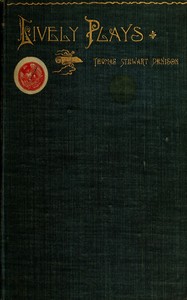
Lively plays for live people — Story, Setting & Ideas
31
13
Project Gutenberg
2023
Comedy plays; American drama -- 19th century; Farces
Readers of public-domain and historical texts
Project Gutenberg digital edition
en
Edition facts
Words: 76,566
Reading time: 333 min
Text sections: 22
Source:
Project Gutenberg record #70635
Ten plays by Thomas S. Denison, mixing farce and comedy with stock characters, mistaken identities, and rapid dialogue. The author emphasizes action and novelty, noting over 320,000 copies sold of earlier plays. Excerpts show a self-aware preface and scenes of comic chaos in clubs and courtships.
Editorial Edition Score
4.8/5
★★★★★
★★★★★
Calculated from edition completeness, EPUB availability, text structure and catalogue metadata. Not a user rating.
Edition quality
Thomas S. Denison opens his 1895 collection with a blunt preface: “The first requisite in a play is action.” He then reports that his earlier plays sold over 320,000 copies in paper covers—a figure that suggests a popular audience for his brand of farce-comedy. The ten plays that follow, including Topp’s Twins, The New Woman, and A Dude in a Cyclone, deliver on that promise of action through rapid entrances, mistaken identities, and characters who talk in exclamations.
Action Over All
Denison’s preface insists that action, novelty of incident, and freshness of dialogue are the playwright’s chief tools. The excerpts bear this out: scenes pivot on dropped notes, hidden listeners, and near-miss encounters. In The New Woman, Rosa Lightfoot darts behind a screen to avoid Birdie Robbins, then frets that her suitor may arrive at any moment. The stage directions—“Darts behind screen L.”, “Comes from behind screen.”—keep bodies moving. Denison also peppers his dialogue with asides and soliloquies that telegraph character anxiety, as when Rosa mutters, “Here’s a pretty go!” after a note is discovered. The result is a theatrical engine built on physical comedy and verbal speed, not psychological depth.
The New Woman and Old Farce
The play The New Woman (included in the collection) gives a flavor of how Denison treats contemporary social types. Rosa Lightfoot tries to strike a pose of modern nonchalance—“We can be nonchalant, too. I’ll coolly light a cigar”—only to find she has given her last cigar away. The joke lands on the gap between aspiration and habit. Birdie Robbins, meanwhile, scolds the club’s absent directors and frets over missing soap and pilfered cigars. Denison does not argue for or against the “new woman”; he uses her as a source of comic contradiction. The farce structure—hidden letters, mistaken identities, characters popping in and out of rooms—remains the same whether the players are suffragists or oyster dealers.
A Self-Promoting Author
Denison’s preface is also a sales pitch. He notes that his earlier plays sold 320,000 copies in paper covers, and he lists thirty-six titles under his name. The collection itself is a kind of catalogue: the table of contents runs from Topp’s Twins to The Cobbler, a monologue. The author’s voice intrudes again in the character list for Topp’s Twins, where Cadwalader Topp is described as “irascible, vain, great stickler for ‘honah.’” The dialect spelling hints at the broad comedy to come. Denison clearly knew his market—amateur theatrical groups and small-town performers—and tailored his plays for easy staging. The preface’s defensive tone (“these explanations are made because the purpose of a previous volume…appeared to have been misunderstood”) suggests he had learned from earlier criticism.
Readers approaching Lively Plays for Live People should expect brisk, unpretentious farce built for the stage rather than the page. Denison’s characters are types—the flustered spinster, the cheeky drummer, the pompous twin—and his plots rely on coincidence and concealment. The plays reward attention to timing and physical business. Those interested in late-nineteenth-century popular theatre, or in how playwrights marketed themselves to amateur companies, will find this collection a useful primary source.
Reader reflection
Your personal reading reflection
Build a private reading journal entry for this title.
Your progress
0
/
10
2
How much did you enjoy the reading experience?
3
Would you pass this book on to a friend?
4
Did the language feel accessible?
5
What was the strongest part of the book?
6
Was the book easy to understand?
7
How well did it match your expectations?
8
How would you describe its reading pace?
9
What changed or sharpened your thinking?
10